MR for Accessibility: Augmenting Senses for Inclusive Virtual Worlds
Mixed Reality (MR) can adapt and extend human senses, letting people operate beyond real-world constraints and helping to level the playing field across physical, social, and environmental limitations. This post introduces the theme, outlines exemplar studies, and points to resources for designing inclusive MR systems. fileciteturn0file1
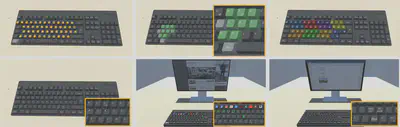
Why accessibility in MR matters
By decoupling experience from strictly physical laws, MR enables users to achieve tasks otherwise difficult or impossible, and supports participation by people with diverse abilities. The goal is not only access, but equitable agency, confidence, and performance in complex environments. fileciteturn0file1
Selected works and contributions
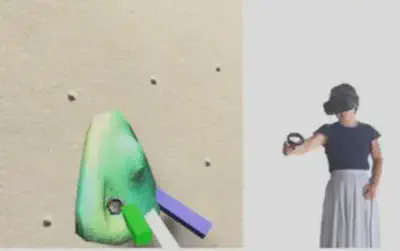
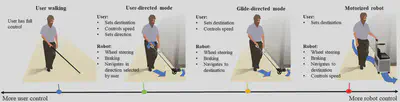
- Navigation and agency for blind travelers. Glide explores mode switching between device-directed and user-directed control, studying impacts on agency, trust, and performance with blind/low-vision participants (HRI ’23). This line of work contributed to the formation of Gliadance.IO. fileciteturn0file1
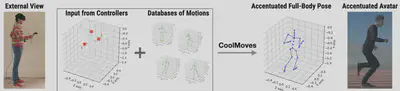
- Expressive avatar motion from sparse input. CoolMoves synthesizes accentuated full-body motion in real time from commodity VR signals using database matching and probabilistic smoothing (IMWUT ’21). fileciteturn0file1
- Sound accessibility taxonomy for VR. A two-dimension framework (source × intent) categorizes sounds across dozens of apps, informing visual/haptic sound substitutes for D/deaf and hard-of-hearing users (DIS 2021, Best Paper). fileciteturn0file1
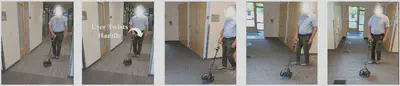
- Unimanual→bimanual interaction mapping. Two-In-One defines a design space that remaps limited unimanual input to bimanual interactions in VR (TACCESS). fileciteturn0file1
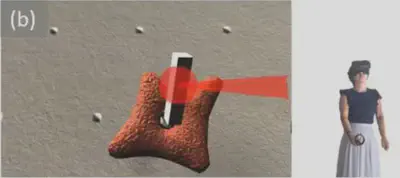
- Toward sound accessibility in VR. Empirical guidance for accessible auditory representations and alternatives (ICMI 2021). fileciteturn0file1
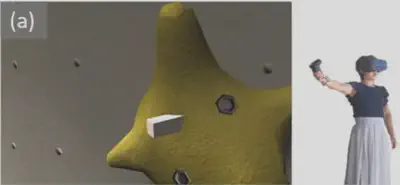
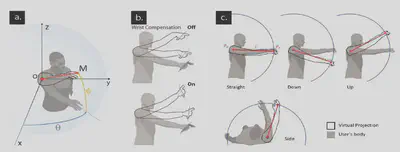
- Movement projection and stylization. SnapMove examines projected movement transformations to support performance and expression (AIVR 2020). fileciteturn0file1
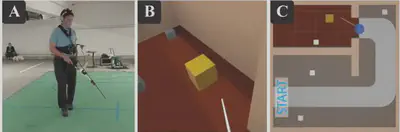
- Non-visual navigation in VR. A haptic+auditory “white cane” enables navigation of complex virtual spaces without vision (CHI 2020, Honorable Mention). fileciteturn0file1
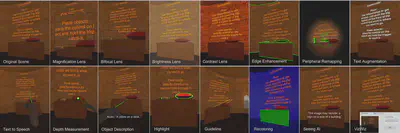
- Low-vision tools for VR. SeeingVR bundles techniques to improve readability, contrast, and guidance for low-vision users (CHI 2019). fileciteturn0file1
Outlook
Accessibility in MR requires coordinated advances in sensing, semantic feedback (audio/visual/haptic), and interaction design. The literature above illustrates how control sharing, motion synthesis, alternative sensory channels, and adaptive tooling can increase agency and inclusion across user groups. fileciteturn0file1 """
Diar Abdlkarim
Postdoctoral Research Scientist
Postdoctoral research scientist working on non-invasive brain-computer interfaces, naturalistic movement decoding and immersive systems.