Research
We study how humans perceive, act and collaborate in immersive environments, then apply that knowledge to extended reality (XR) systems that support interaction, learning, accessibility and creative performance.
Our work combines psychophysics, computational modelling, human-computer interaction, machine learning, real-time motion analysis and applied design. The lab collaborates across psychology, computer science, music technology, robotics, sport, healthcare and the creative industries.
For an overview of the funders, industry partners and cultural organisations that support this work, see the Funding page.
Activities
The lab serves as a hub for research, development and training in virtual, augmented and mixed reality (VR/AR/MR). We support projects through equipment access, technical advice, workshops, student training and interdisciplinary collaboration.
BhamXR
The VR Lab is part of and actively supports BhamXR, the University of Birmingham’s interdisciplinary XR network. BhamXR brings together researchers, students and partners working on virtual reality, augmented reality, haptics, wearables, data science, performance, creative technologies and responsible immersive futures.
Recordings from the BhamXR talk series are available on the BhamXR YouTube channel.
Through BhamXR, the lab helps connect people to:
- Seminars and showcases that share XR research, tools and emerging project ideas.
- Workshops and training for researchers and students who want to use immersive technologies.
- Collaborative projects across Psychology, Computer Science, Engineering, Medicine, Sport, Music and the Arts.
- Technical support and equipment access for groups developing XR experiments, prototypes and public-facing activities.
This network activity is central to how the lab builds collaborations beyond individual projects.
Student Research and Project Programmes
The lab also supports structured student research and project routes connected to its wider XR activity.
BSURE gives undergraduate students a route into summer research experience, including applied XR, interaction design, data capture and technical prototyping. A recent example is our BSURE 2025 summer research group.
The Birmingham Project gives students a separate route into interdisciplinary project work, where immersive technologies can be explored through collaborative research and development challenges.
Supporting these programmes is part of the lab’s broader role as a place where students can move from coursework and training into practical research, development and collaboration.
Virtual Reality Student Society
We support the University of Birmingham VR Student Society, a student-led community for people interested in XR technologies. The society runs events, demos and practical activities, and the lab contributes through training, mentorship and access to equipment where appropriate.
To join the VR Student Society, visit the Guild of Students page.
VR Training for Researchers
We offer specialist VR training for academics and students who want to use immersive technologies in research. Training can cover:
- Fundamental concepts in VR, AR and MR.
- Practical use of XR hardware and software.
- Integrating VR into experimental and applied research.
- Good practice for interdisciplinary XR collaboration.
To register your interest in a future course, contact us through the Get in touch section.
Main Research Areas
Fundamental Challenges in XR
This area examines core interaction problems where XR technologies are still limited, or where no single solution fits every task, environment or user group.
We study:
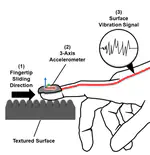
- Haptics and force feedback, where current systems cannot fully reproduce the richness of real-world touch.
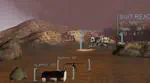
- Locomotion in VR, where teleportation, joystick movement, redirected walking and hybrid techniques each shape comfort, precision and spatial awareness.
- Text entry and communication, where mid-air keyboards, gesture typing, speech and AI-assisted input perform differently depending on context.
- Embodiment and control, including how users adapt to virtual hands, tools, and full-body avatars.
The goal is to explain when and why interaction techniques succeed, how users adapt to system limitations, and how XR interfaces can be designed for diverse tasks and abilities. Outcomes include conceptual frameworks, open datasets and validated design guidelines.
Interactive Experiences and Applications
This area investigates how immersive technologies can support performance, collaboration and audience engagement across music, sport, cultural heritage and public experiences.
We develop:
- ARME and virtual music ensembles, using motion capture, audio analysis and avatar animation to create rehearsal and performance environments for musicians.
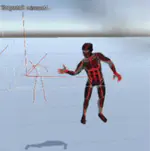
- Sport visualisation and tracking, where motion capture and analytics provide real-time feedback for performance, training and rehabilitation.
- Cultural and heritage visualisation, including projects such as Kenilworth Revealed, which reconstruct historical sites in augmented reality for public engagement and learning.
- Interactive installations and experiences, where movement, timing, and multisensory cues are used to create responsive museum exhibits, educational applications, and public-facing immersive artworks.
Representative outputs include VR and AR rehearsal environments, iPad and Vision Pro applications, museum installations and live data visualisation systems.
Interdisciplinary Research Support
The lab is open to researchers, students and partners who want to collaborate, develop an idea, get technical support or use specialist equipment. This work includes helping collaborators shape study designs, select XR tools, prototype interactions, capture motion and connect with relevant people across the wider University network.
Translation Activities
The lab supports industry engagement, commercialisation and public-facing translation. Current and recent spinout activity includes:
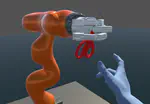
- ObiRobotics: Hand and body tracking technologies for robotics and XR.
- MotionDynamics Ltd: Motion capture and movement analytics for sport and rehabilitation.
- MyJAMS Ltd: AI-enhanced virtual ensembles and immersive music practice environments.
List of Current Projects
Browse a selection of active projects below. These examples show how the lab connects perception research, interaction design, technical development and real-world applications.